
from entertainment to real estate
There are moments in a career when growth no longer means doing more of the same, only bigger, louder, and more visible, but rather stepping deliberately into unfamiliar territory, where the rules are different, the language is different, and even the skills you thought you understood begin to reveal another meaning.
Joining BALFIN Real Estate was one of those moments for me.
By then, I had already spent years inside the restless machinery of entertainment, working on projects that were measured not only in pixels and formats but in meters of stage, enormous LED surfaces, crowds, lights, music, printed materials scattered throughout a city, and visual identities that had to survive the chaos of events where everything moved quickly and decisions sometimes had to move even faster.
I had learned how to think big.
But I wanted to learn how to think deep.
After completing several projects that were large both in scale and public impact, I began to feel that the next step in my professional development was not necessarily another festival, another stage, or another spectacular execution. What I wanted was something almost opposite: to enter a structure larger than myself, to become one moving part inside a much more complicated machine, and to understand what happened to creativity when it was no longer a one-man show, but instead had to coexist with strategy, research, sales, budgets, management, deadlines, departments, and dozens of people whose priorities were not always the same.
In many ways, my background made me an unusual candidate for a corporate real estate company.
Entertainment and real estate seem to breathe at different speeds. One lives through immediacy, spectacle and emotion; the other through trust, permanence, investment and decisions whose consequences can stretch across years. One asks you to capture attention in seconds, while the other asks you to build confidence slowly.
Somewhere between those two worlds, however, there was a bridge.
During my interview, Komola Sako, then Marketing Director, must have recognized something in the way I approached creative work that could survive that crossing; something that could take the instinct, visual energy and unconventional thinking I had developed in entertainment and translate them into the more rigorous language of real estate.
That transition would eventually change the way I understood design itself.


one-man show to orchestra
From one-man show to orchestra
For the first time in my career, I was no longer designing alone.
I had a team of three other designers, and my position existed somewhere between several roles that occasionally overlapped and occasionally pulled in completely different directions: I had to remain creative enough to propose concepts and visual worlds, managerial enough to organize and guide other designers, and practical enough to sit down and produce the work myself whenever necessary.
If my previous professional life had often resembled playing several instruments alone on a stage, this was closer to learning how to conduct an orchestra while still occasionally having to pick up an instrument and play.
And conducting turned out to be an entirely different discipline.
The transition was confusing at first because creativity, which previously could travel almost directly from thought to execution, suddenly encountered doors.
And behind every door there was another conversation.
Email threads became longer. Meetings appeared between ideas and their execution. Reports had to be built. Budgets had to be considered. A visual direction could travel through marketing managers, sales teams, management and other stakeholders before returning to the design department transformed by questions that had very little to do with typography or composition.
At first, this felt like friction.
I had been accustomed to moving quickly, and now an idea that seemed perfectly clear inside my head had to survive a journey through approvals, competing interests and different interpretations before it could exist in public.
But gradually I understood that this friction was teaching me something important: in a large organization, creativity cannot simply be created; it has to be translated.
A designer has to learn how to explain why an idea matters, how it supports a business objective, how it speaks to a specific audience, why simplicity might be more powerful than decoration, and sometimes why the most visually exciting solution is not necessarily the most effective one.
Komola played an important role during that transition. Beyond being my director, she became a mentor in understanding the corporate landscape, helping me navigate the bureaucracy that initially felt like a maze while protecting enough creative freedom for me to continue experimenting, proposing and occasionally pushing against the walls of that maze.
Because perhaps that is one of the quiet contradictions of creative leadership inside a corporation: you need structure, but not so much that creativity suffocates; you need freedom, but not so much that everyone begins walking in a different direction.
Finding that balance took time.
building a creative culture
Building a creative culture
Over the following years, the design team itself evolved.
People changed, new designers joined, responsibilities expanded, and eventually I found myself surrounded by a team of professionals for whom I developed not only professional respect but genuine human appreciation.
Looking back across four years, the transformation is easier to see than it was while living inside it.
Brands rarely change overnight. They change almost imperceptibly, through hundreds of small decisions — a cleaner layout here, a better photograph there, a stronger typography system, a campaign that refuses an unnecessary element, a presentation treated with the same care as a billboard, another proposal accepted because the previous one proved that design could be trusted.
And slowly, those individual decisions begin accumulating like layers of sediment until, one day, you look back and realize that the landscape itself has changed.
The overall visual language of BALFIN Real Estate became more mature, more restrained and more refined, but what I consider equally important was another transformation that could not necessarily be seen in a brand guideline: the relationship between creativity and management changed.
Trust grew.
Ideas that once might have required lengthy explanations began entering conversations more naturally because previous work had already created evidence. Design was no longer simply the department that made things look good at the end of the process; increasingly, it could enter earlier, while the communication itself was still being shaped.
And that distinction matters enormously.
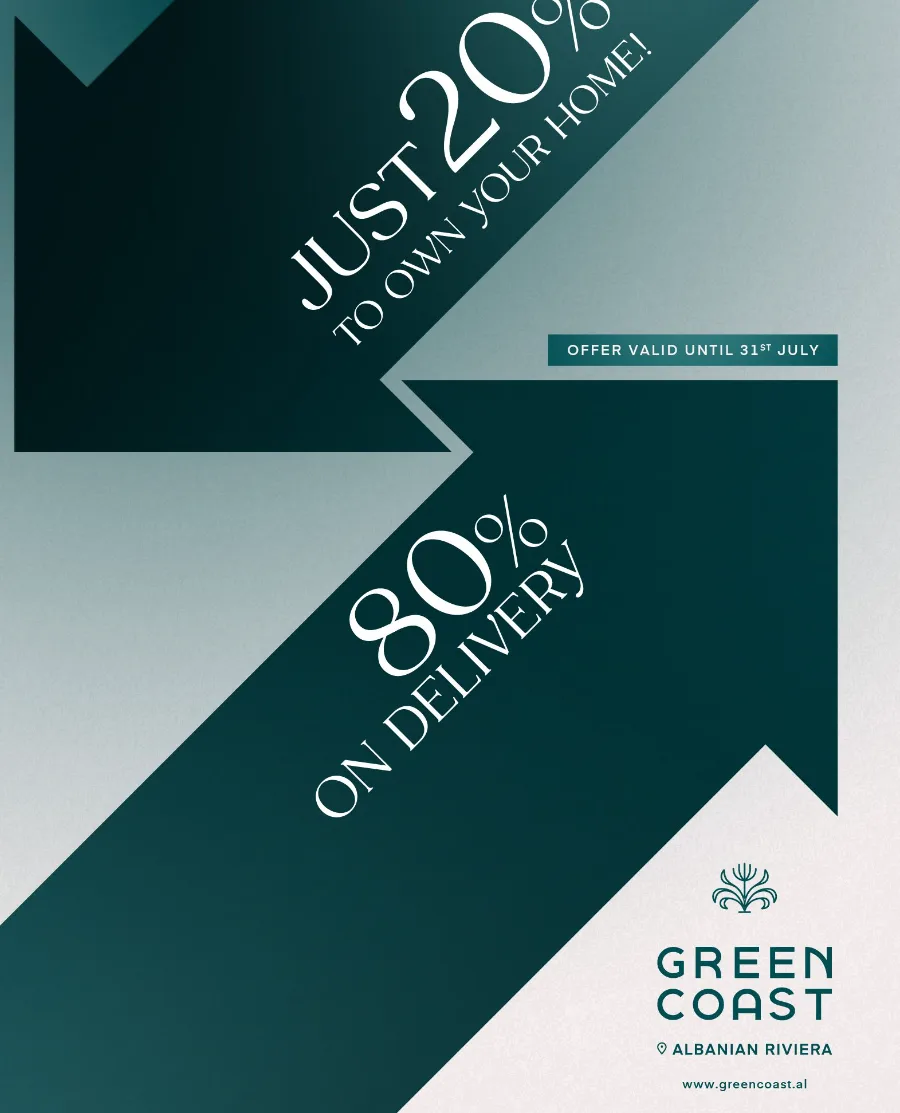


design meets the business
When design meets the rest of the business
Perhaps the greatest lesson BALFIN Real Estate gave me was that marketing is not a collection of isolated departments but an ecosystem, and design is only one species living inside it.
With a marketing structure of more than thirty people working across PR and communications, production and budgeting, market research, marketing management, social media, customer care and design, campaigns were rarely born from a single desk.
They were assembled.
A market insight could become a strategic direction; that direction could become a campaign concept; the concept could become photography, film, social communication, outdoor advertising, sales materials, events, digital assets and customer interactions, until eventually dozens of apparently separate pieces began speaking with one voice.
This was where I learned to think in 360 degrees.
Not because every campaign needed to exist everywhere, but because every creative decision existed in relation to something else.
A billboard was connected to a social media campaign. A brochure was connected to a sales conversation. A render was connected to an investment promise. A brand identity was connected to the expectations of someone preparing to spend a considerable amount of money on something that, in many cases, did not yet physically exist.
And suddenly design carried a different weight.
In entertainment, I had learned how to create anticipation.
In real estate, I began learning how to create trust.
the language of premium
Learning the language of premium
Real estate and hospitality also changed my relationship with visual restraint.
Coming from entertainment, where communication often fights for attention through energy, scale and visual intensity, I entered an environment where premium communication frequently worked in the opposite direction.
It whispered.
Space became an element rather than an absence. Typography could carry more authority than decoration. A single photograph could communicate more than a crowded composition, and removing something from a layout could occasionally be more important than adding something to it.
This simplicity, however, was deceptive.
Minimalism is easy when there is nothing to say; it becomes difficult when there are prices, amenities, architectural specifications, investment arguments, locations, lifestyle promises and sales objectives all competing for the same piece of communication.
The challenge was learning how to make complexity feel effortless.
At the same time, working closely with marketing and sales exposed me to another perspective that designers can easily ignore when they remain exclusively inside the creative bubble: the perspective of the person who has to sell what we design.
Sales has its own gravity.
It pulls communication toward clarity, urgency and conversion, while branding often pulls toward consistency, perception and long-term value. Neither side can completely dominate the other. Somewhere between them lies the communication that both protects the brand and moves the business forward.
Understanding that tension made me a different designer.
brands, not only visuals
Building brands, not only visuals
During this period, I had the opportunity to work on identities that extended beyond individual campaigns.
I contributed to the creation of brands such as Next to Valamar Premium and BALFIN Americas, while also participating in the restructuring of BALFIN Group’s real estate presence into a clearer brand architecture encompassing BALFIN Real Estate, BALFIN Development, BALFIN Construction and BALFIN Asset Management.
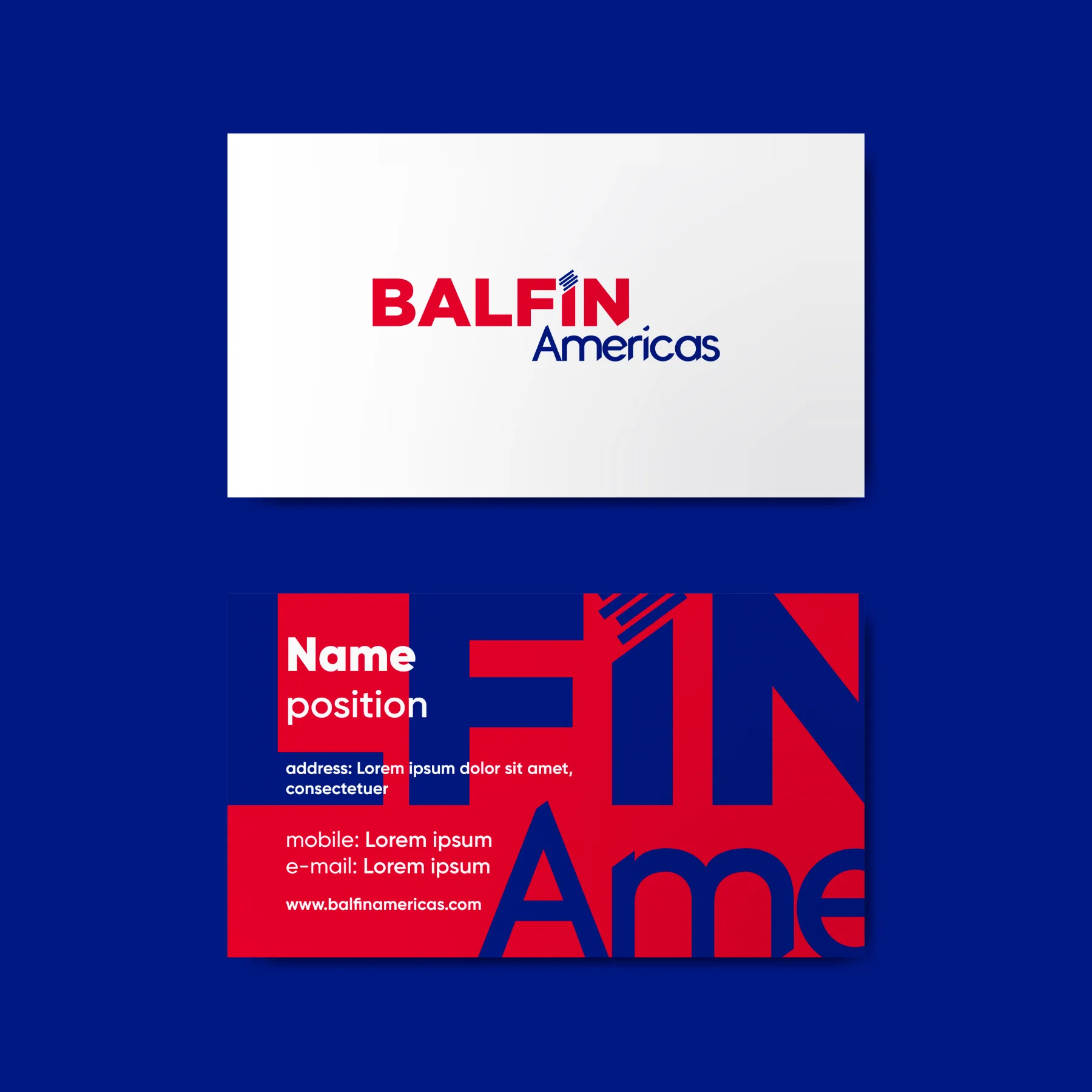
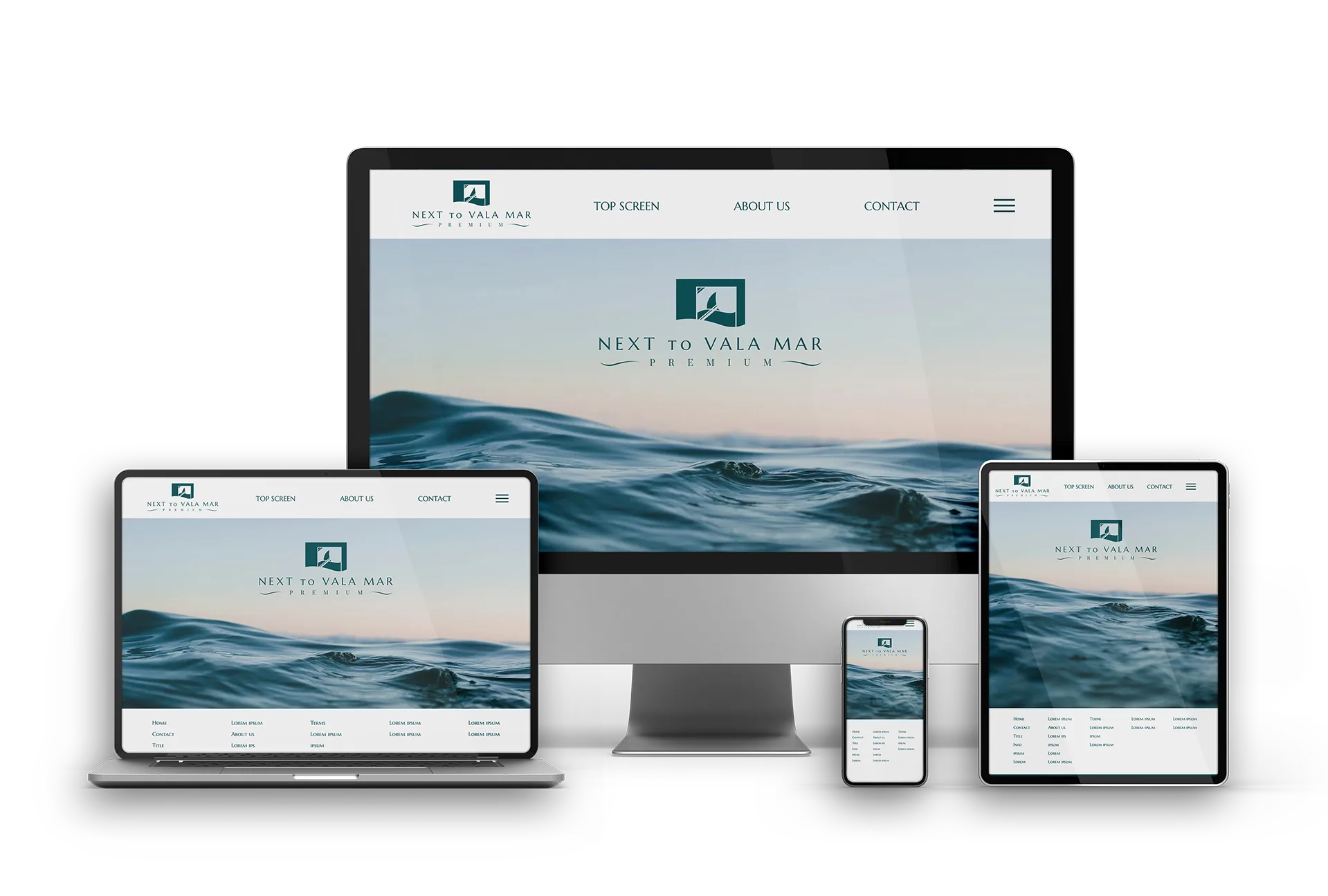
Projects like these forced me to think beyond the immediate visual surface.
A logo can be designed relatively quickly.
A brand has to survive.
It has to survive presentations and billboards, construction fences and social media posts, architectural renders and investor meetings, sales materials and corporate documents; it has to remain recognizable when handled by different people, across different projects, sometimes across different countries and audiences.
That is where design stops being an image and begins becoming a system.
And systems taught me patience.
the other side of the screen
Design on the other side of the screen
When I entered BALFIN Real Estate, I still carried with me a predominantly creative understanding of design: the instinct to make something distinctive, coherent, beautiful and memorable.
Four years later, that definition has expanded.
I now see design from the other side of the screen as well.
Behind a campaign there are budgets. Behind a brochure there may be a sales target. Behind a visual identity there is positioning. Behind a beautiful render there is an investment proposition. Behind a seemingly simple social media post there can be research, production, approvals, legal considerations, stakeholder interests and a customer who ultimately has to make a decision.
Design exists somewhere in the middle of all of them.
Its role is not merely to decorate business after the important decisions have already been made.
At its best, design is one of those decisions.
It can generate attention and transform that attention into leads. It can make an expensive product feel trustworthy before the customer ever touches it. It can simplify complicated propositions, create consistency across hundreds of interactions and give an organization a recognizable voice in markets where everyone is competing for the same pair of eyes.
Looking back, perhaps the greatest change BALFIN Real Estate produced in me was not stylistic at all.
It changed the scale through which I measure creative work.
I entered from entertainment believing primarily in the power of the image; I gradually learned to understand the machinery surrounding that image — the people who approve it, the people who finance it, the people who sell through it and, ultimately, the people whose decisions it is supposed to influence.
And somewhere between the designer I was when I entered and the creative leader I became along the way, I stopped seeing creativity and business as two opposing forces.
I began seeing them as two sides of the same architecture.
Because beautiful design can capture the eye.
But design that understands why it exists can move something much larger.